Plastic Free July: New City Study Charts the Future of a Litter-Free River System
Plastic Free July is the perfect time to rethink our use of single-use plastics, and a newly released City of Chicago study underscores why it matters.
The City's new Solids and Floatables Study, prepared as part of Chicago's updated National Pollutant Discharge Elimination System (NPDES) permit, evaluates the sources of trash entering the Chicago Area Waterway System and identifies the most effective strategies for keeping litter out of our rivers.
The findings reinforce years of advocacy by Friends of the Chicago River and our partners to strengthen the City's NPDES permit. Friends was proud to collaborate with the Chicago Department of Water Management throughout development of the study by sharing local research, data, and best practices from our Litter Free Chicago-Calumet River initiative, a regional partnership focused on preventing litter before it reaches our waterways.
The report confirms that decades of investment in the Tunnel and Reservoir Plan (Deep Tunnel) have dramatically reduced trash entering waterways through combined sewer overflows. Today, the greatest sources of floatable debris are litter and illegal dumping along shorelines, along with trash washed through storm drains during rainstorms. To address these challenges, the study recommends expanding shoreline cleanups, strengthening public education, improving trash monitoring, evaluating passive trash-capture technologies, and continuing partnerships with organizations already leading this work.
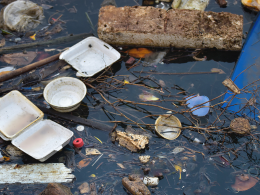
The study also highlights the outsized role plastic plays in river pollution. An estimated 75–80% of the trash found in the Chicago River is plastic, making it by far the most common type of litter in our waterways. Previous research conducted through Friends' Litter Free Chicago-Calumet River Initiative found that more than 85% of litter in the river system is plastic, and more than 85% of that plastic is foodware—items such as cups, takeout containers, foam food containers, plastic utensils, and other products designed to be used once and thrown away.
Take Action This Plastic Free July
During Plastic Free July, you can help protect the Chicago-Calumet River system by choosing reusable bottles, mugs, shopping bags, and food containers, avoiding single-use plastics whenever possible, and properly disposing of waste before it can wash into storm drains and rivers.
Foam food containers may be inexpensive for takeout, but they come with a lasting environmental cost. Made from polystyrene, they easily break apart into small pieces that litter neighborhoods, parks, and waterways, where they can persist for decades.
Friends is also a founding member of the Coalition for Plastic Reduction, working alongside environmental and community organizations across Illinois to reduce plastic pollution at its source through education, advocacy, and policy.
You can also make an immediate impact by organizing a neighborhood cleanup using one of Friends' free Litter Free Supply Stations, located at community hubs throughout the watershed. Each station includes litter grabbers, buckets, bags, gloves, and a Litter Free Toolkit (available in English and Spanish) with everything you need to safely organize a cleanup. Together, these community-led efforts are helping build a cleaner, healthier, and more litter-free Chicago-Calumet River system.
As the City begins implementing the study's recommendations, Friends looks forward to continuing our partnership with the Chicago Department of Water Management to expand litter prevention efforts, pilot innovative trash-capture technologies, and advance solutions that keep plastic and other debris out of our rivers before they become pollution.
