
Exploring Riverfront Management Best Practices at Lathrop Homes
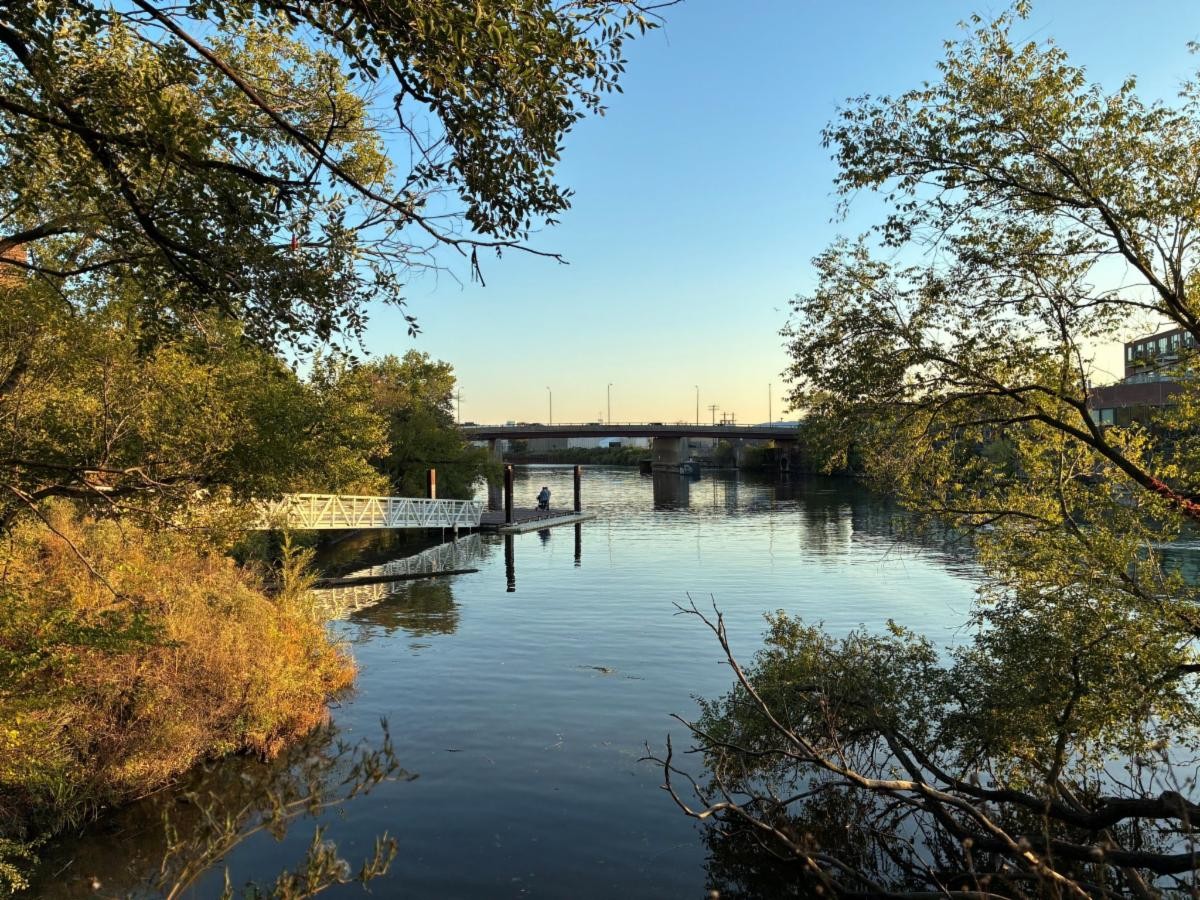
Sunset shadows over the Chicago River provided a fitting backdrop for a recent gathering of the City of Chicago’s River Ecology and Governance Task Force at the Lathrop Homes riverfront on the North Branch of the Chicago Rivier. Facilitated by Friends of the Chicago River in partnership with the Chicago Department of Planning and Development, the task force brings together residents, advocates, designers, ecologists, site managers, engineers, planners, and other river experts to explore opportunities for improving and protecting the city’s riverfront spaces.
The group visited the Lathrop Homes riverfront, which opened in 2019, to discuss design and management best practices and other lessons learned from this relatively recent, but well-established river edge landscape. Conversations from the informal site tour focused on balancing invasive species removal with protecting existing vegetation, including taking a phased approach that avoids clear-cutting and replaces trees as they are removed.
Participants also explored ways to prevent erosion while supporting wildlife movement and public access to the river. Rather than relying on concrete walls, fences, and other barriers, thoughtful, light-touch improvements can help preserve natural river edges while creating opportunities for people to experience nature and observe wildlife. These approaches can help ensure that riverfront spaces remain welcoming and ecologically valuable for generations to come.
Beyond initial design and construction, the discussion highlighted the importance of long-term stewardship. Maintaining beloved riverfront trails and natural spaces requires ongoing care, community involvement, and a commitment to preserving the original vision while responding to the needs of the people who live nearby.
The visit also offered an exciting look at the beginning of a northward extension of the riverfront trail onto an adjacent property where townhomes are under construction. Extending the trail will open another previously disconnected stretch of riverfront, giving more people the opportunity to access, explore, and enjoy the Chicago-Calumet River system.
