
Litter in our Rivers
Trash in the Chicago-Calumet River system comes primarily from local sources, making local action essential to protecting the watershed.
- Plastic dominates river litter: About 75–95% of trash in and around the river is plastic, with roughly one-third consisting of polystyrene foam. The majority consists of food containers and single-use packaging.
- Litter reaches our rivers primarily through:
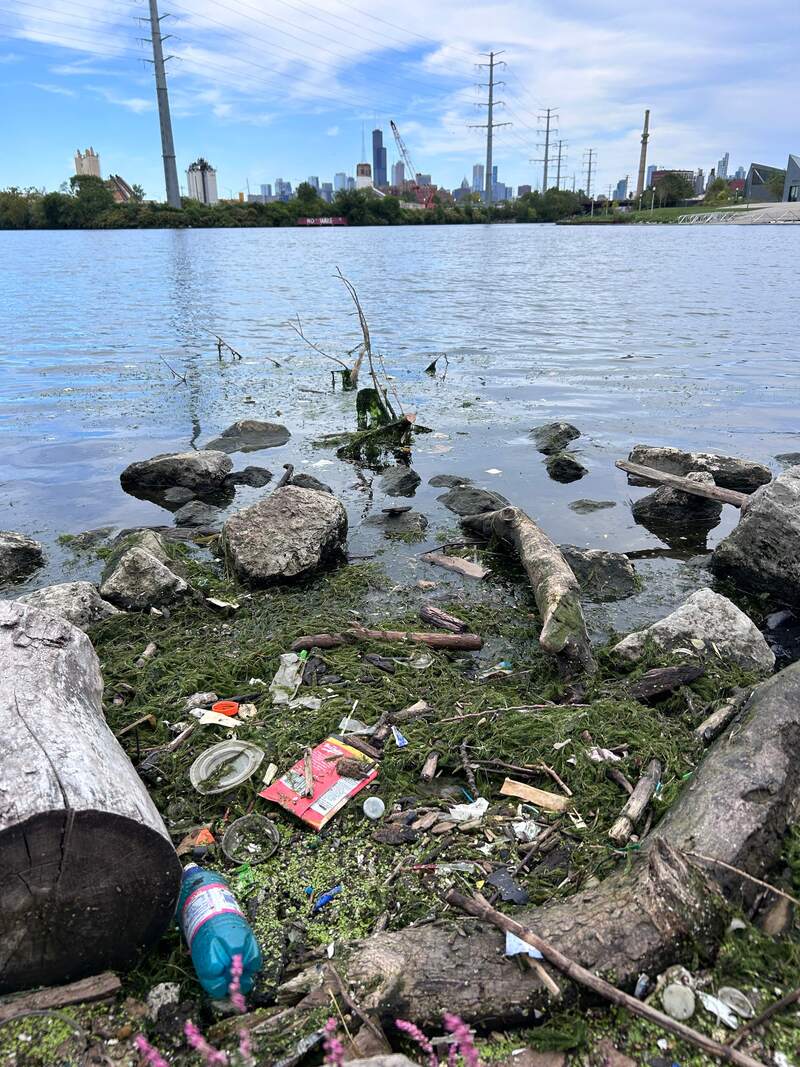 Litter in our streets, parks, and properties can get blown in by winds, rain, or animals knocking over bins
- Combined sewer overflows: extreme rainstorms wash street trash and sanitary products from people’s homes into the river
- Plastic manufacturing: ‘Nurdles’ or small plastic pieces used in manufacturing are found throughout the river system
- Plastic persists in the environment: Plastics break down into microplastics (particles smaller than 5 mm) and remain in the environment for very long periods, most forever.
Litter has community costs.
- People can be exposed and harmed:
- “Both plastics and their chemical additives can be toxic,” including known plastics like BPA.
- Over 16,000 chemicals are known to be involved in the production of plastic, and at least 25% of them are identified as “chemicals of concern.”
- “Both plastics and their chemical additives can be toxic,” including known plastics like BPA.
- The burden is unequal: Communities of color and lower-income communities have historically experienced greater exposure to plastic production, transportation, waste disposal, and related pollution, including areas around Chicago's West, South, and Southeast Sides.
- Trash can clog drains and sewers, leading to localized flooding requiring significant cleanup resources and contributing to perceptions of neglected environments.
-
Wildlife is harmed when tangled in trash or by eating microplastics, which can lead to malnourishment and starvation.
-
More than 93% of fish in our river system have microplastics in their bodies (Hou et al. 2021).
-
